
Legal information · Independent living
Independent Living
Independent living does not mean doing everything alone. It means being able to make decisions about your own life and choose the support you need.
Examples of personal choice and support for everyday life.

Infographic
The person is at the center
In independent living, the person makes their own decisions and chooses the support they need. These six concepts show how that choice connects with everyday life.
1
Personal choice
People choose where, with whom and how they live, and take responsibility for their decisions.
2
Housing and everyday surroundings
People learn to manage everyday activities in their own environment, such as preparing food, using banking services and smart devices.
3
Personal assistance
A trained assistant respects the person's wishes and choices while supporting everyday activities.
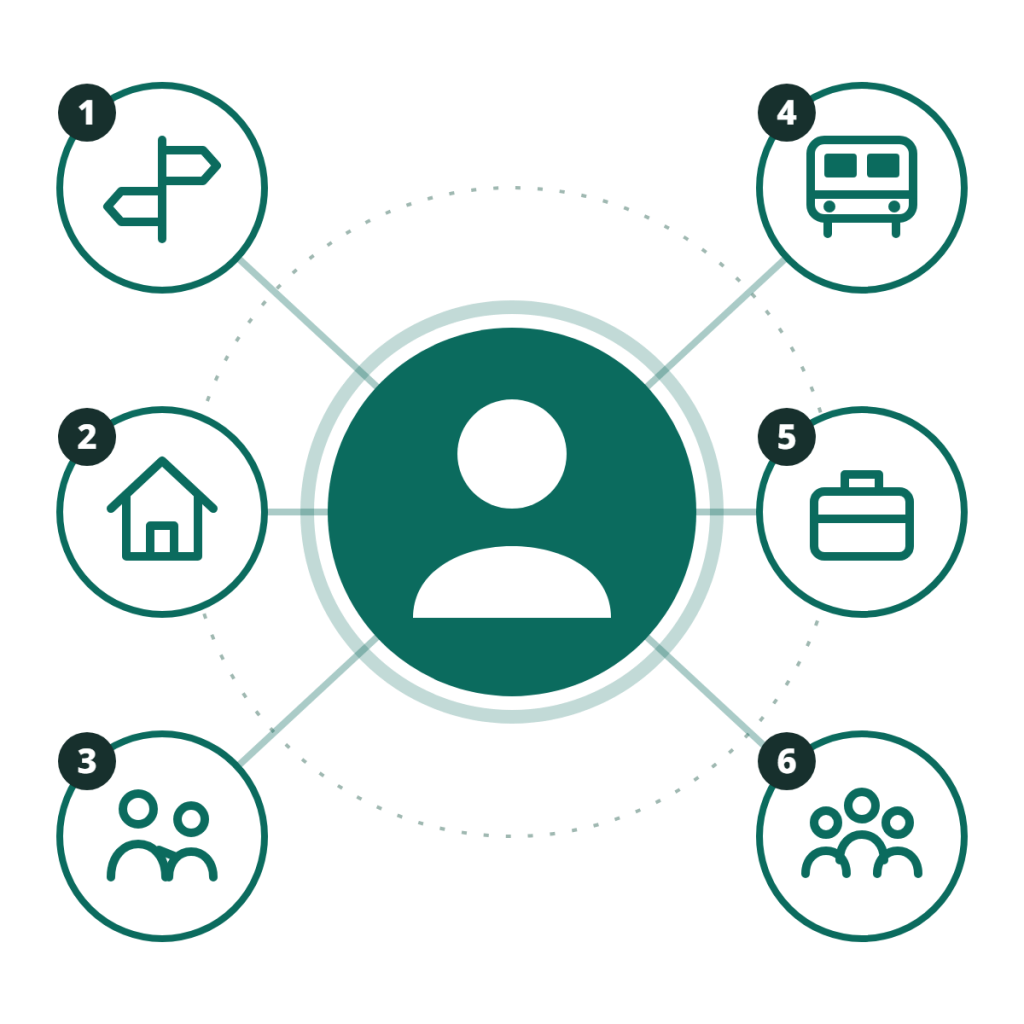
The person is at the center: making decisions about their life and choosing the support they need.
4
Mobility
Being able to travel from home to work or school is important. Interview participants identified inaccessible transport as a major barrier.
5
Learning and work
Having the right support increases opportunities to study and work.
6
Social participation
A person who has spent a long time isolated at home begins taking part in meetings, training and community activities.
Explanation
What is independent living?
Independent Living is a rights-based approach that views a person with a disability as the decision-maker in their own life, rather than a welfare recipient. The type and duration of support reflect the person's needs and wishes.
The movement began in the United States in the 1960s, and the world's first independent living center opened in Berkeley in 1972. Universal Progress ILC has worked in this field in Mongolia since 2010.
Independent living means
- Making decisions about your own life
- Choosing the support you need
- Participating in society on an equal basis with others
Independent living does not mean
- Doing everything alone, without support
- Other people making decisions on your behalf
- Treating a personal assistant as a caregiver or domestic worker
Everyday examples
How does it work in daily life?
These general examples draw on the organization's articles and interviews.
Getting ready for work in the morning
Situation: Support is needed with dressing, getting up and eating.
The person decides: When to get up, what to wear and what to do first.
Support: A personal assistant provides support according to the person's wishes.
Getting to work
Situation: The person needs to travel from home to work in a wheelchair.
The person decides: Which route and form of transport to use.
Support: Accessible routes and transport, with an assistant when needed.
Managing housework and finances
Situation: The person is apprehensive about cooking, banking or using a smartphone.
The person decides: What to learn first and the pace of progress.
Support: An independent living program and peer counseling with people who have similar experiences.
Support
Types of support
An introduction to support that can help with independent living. Ask the organization about current availability and eligibility.
Personal assistance services
After the person's needs are assessed, a trained assistant supports everyday activities, learning and work. The assistant respects the person's choices, dignity and privacy.
Peer counseling
A trained person with a similar disability facilitates individual or group conversations, helping the person find their own solutions to difficulties.
Independent Living Program
Practice develops everyday skills and confidence. The content and duration depend on an assessment and conversations about the person's circumstances.
Training and information
Training on daily life, legislation and government services is tailored to the person's needs and interests.
Reading materials
Articles and interviews
Four materials prepared by the organization. Read the full text on the blog or download a PDF.
Article
The Right to Independent Living: Origins and Development
How the independent living movement began and spread around the world.
Interview
Accessibility Means More Than Toilets, Stairs and Entrances (Interview)
An interview with the president of Universal Progress ILC about implementing independent living in Mongolia.
Article
Independent Living Program
Types of support provided by independent living centers.
Article
Personal assistance
Who personal assistants are and why personal assistance matters.
The legal basis of independent living
Read about the right to independent living in Article 32 of the Law on the Rights of Persons with Disabilities.
Quick contact
Ask about independent living
Send a brief question about independent living, personal assistance or peer counseling. The organization will receive your request and contact you through your chosen method.
Contact us directly
If the form does not load, contact us directly by telephone, email or Facebook.